
Kilimanjaro Trekking: Routes, Tips and Amazing Tour Packages
The Roof of Africa Is Waiting. Are You?
Standing at 5,895 meters above sea level, Mount Kilimanjaro is the highest peak in Africa and one of the world’s most accessible high-altitude climbs. With Rift & Ridge Safaris, your summit is planned with care, guided with expertise, and supported every step of the way.
Mount Kilimanjaro: An Overview
Mount Kilimanjaro rises dramatically from the plains of northern Tanzania, a free-standing volcanic giant visible for hundreds of kilometers on a clear day. It is the highest mountain in Africa and one of the Seven Summits, the highest peaks on each continent.
Unlike many of the world’s great mountains, Kilimanjaro trekking requires no technical climbing equipment. It is a high-altitude trek, achievable by fit and determined individuals with proper preparation.
The mountain passes through five distinct ecological zones on the way to its glaciated summit: cultivated farmland, montane forest, heath and moorland, alpine desert, and the arctic summit zone. Each zone is strikingly different, giving the climb the feel of traveling from the equator to the Arctic in the space of a few days.
The summit, Uhuru Peak, sits on the Kibo crater rim and offers one of the most extraordinary views on earth: a vast panorama over the African plains, framed by the remnants of ancient glaciers.
Explore Kilimanjaro trekking routes, expert tips, gear advice, and amazing Kilimanjaro trekking tour packages for an unforgettable climb to the Roof of Africa.
All-Inclusive Kilimanjaro Trekking Routes and Tour Packages
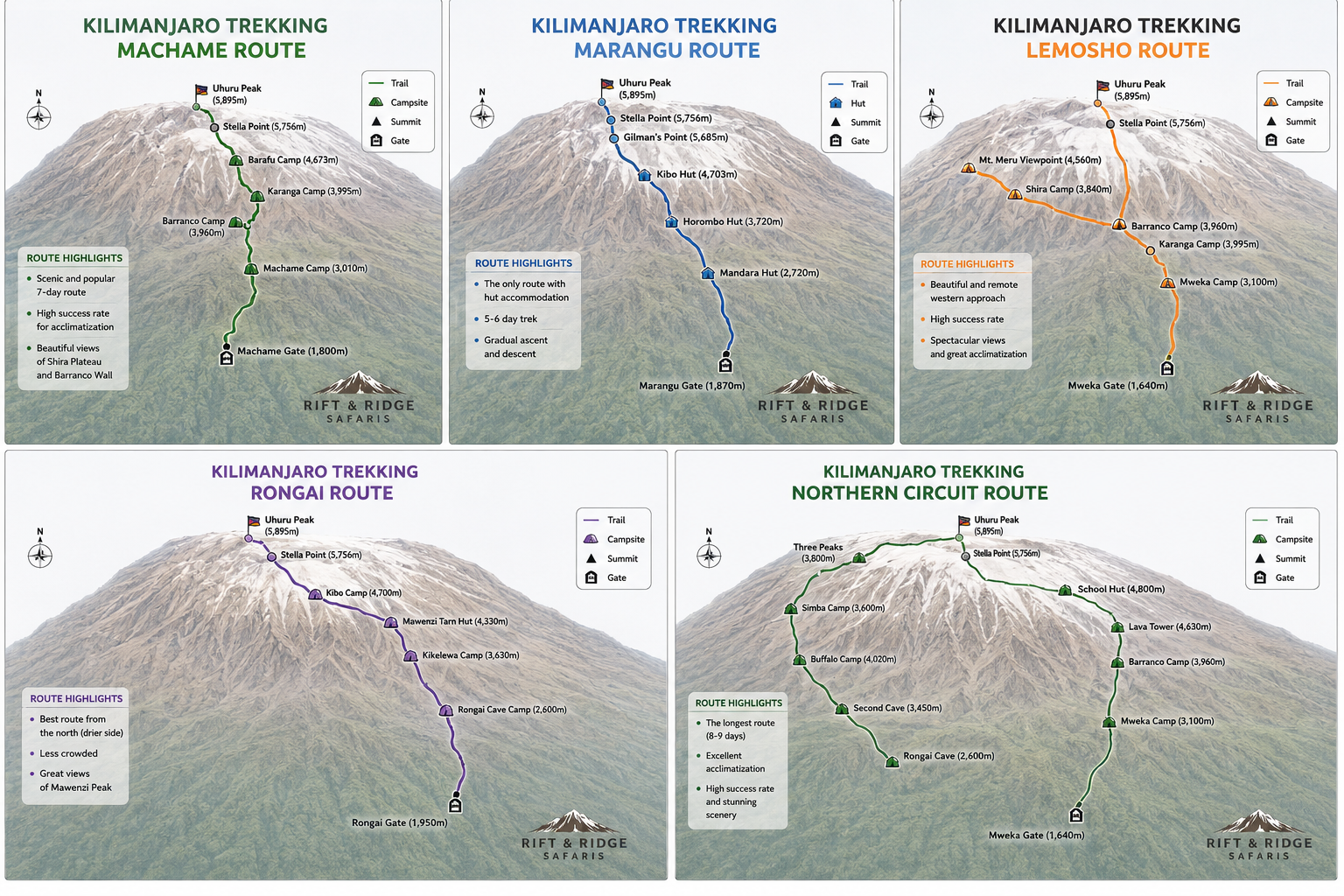
Rift and Ridge Safaris offers unforgettable Kilimanjaro trekking routes and tour packages tailored for hikers from Europe and Russia who want a rewarding mountain adventure in Africa. Whether you choose the scenic Machame Route, the quieter Rongai Route, the challenging Umbwe Route, or the well-paced Marangu Route, our Kilimanjaro trekking routes are planned with expert guides, strong mountain support, quality camping or lodge arrangements, and careful attention to safety and comfort. From first-time climbers to experienced hikers, our Kilimanjaro trekking packages combine stunning landscapes, reliable service, and a well-organized ascent to the Roof of Africa, making your journey both inspiring and memorable.
Machame Route: The Most Scenic Choice
The Machame Route is one of the most popular routes on Kilimanjaro and consistently praised as one of the most scenic. It approaches from the south and southwest, passing through some of the mountain’s most dramatic terrain. The route is varied and visually spectacular, with excellent acclimatization built into its profile through the “climb high, sleep low” principle.
- Duration: 6 to 7 days
- Difficulty: Moderate to challenging
- Accommodation: Camping in tents throughout
- Start/End Point: Machame Gate-Mweka Gate
- Best For: Trekkers seeking scenic landscapes, varied terrain, and strong acclimatization support
From $2,300 per person (6 days) / $2,600 per person (7 days)
Marangu Route: The Classic Hut Route
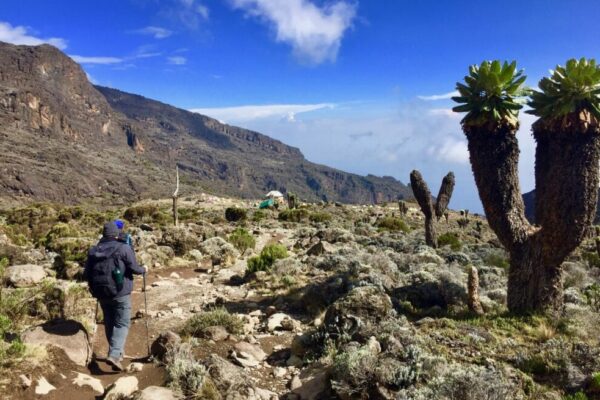
The Marangu Route, sometimes called the “Coca-Cola Route,” is the only route on Kilimanjaro that uses permanent hut accommodation throughout, making it popular with trekkers who prefer not to sleep in tents. It is the oldest established route on the mountain and offers a more straightforward ascent profile.
- Duration: 5 to 6 days
- Difficulty: Moderate
- Accommodation: Shared dormitory huts
- Start/End Point: Marangu Gate
- Best For: Trekkers seeking hut accommodation and a classic route experience
From $1,800 per person (5 days) / $2,100 per person (6 days)
Lemosho Route: Recommended for Summit Success
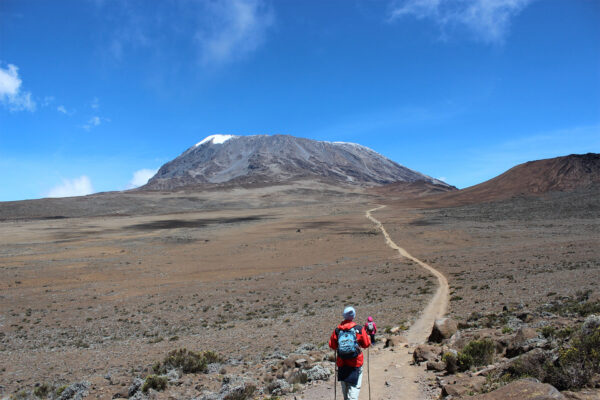
The Lemosho Route is widely regarded as one of the best overall routes on Kilimanjaro. Its longer itinerary allows for better acclimatization, which improves summit success rates. The route also passes through some of the mountain’s most beautiful and remote scenery.
- Duration: 7 to 8 days
- Difficulty: Moderate to challenging
- Accommodation: Camping in tents throughout
- Start/End Point: Londorossi Gate-Mweka Gate
- Best For: Trekkers prioritizing acclimatization, summit success, and diverse scenery
From $2,650 per person (7 days) / $2,900 per person (8 days)
Rongai Route: The Northern Approach
The Rongai Route is the only route approaching Kilimanjaro from the north, near the Kenyan border. It is quieter, drier, and more gradual than many southern routes, making it a good option during wetter seasons.
- Duration: 6 to 7 days
- Difficulty: Moderate
- Accommodation: Camping in tents throughout
- Start/End Point: Rongai Gate-Mweka Gate
- Best For: Trekkers seeking a quieter route and gentler ascent profile
From $2,800 per person
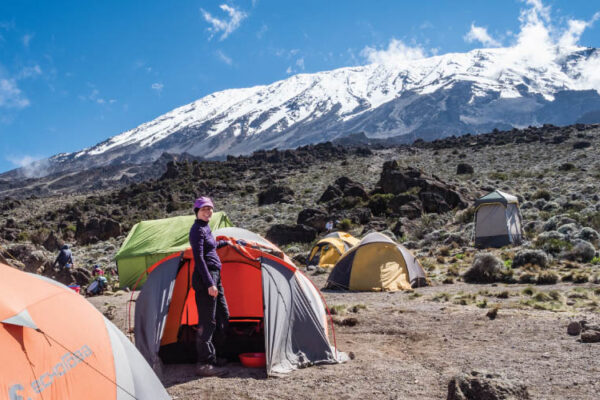
Northern Circuit Route: The Complete Kilimanjaro Experience
The Northern Circuit is the longest route on Kilimanjaro, circling almost the entire mountain before the final summit ascent. It offers the most comprehensive acclimatization profile and some of the highest summit success rates.
- Duration: 9 to 10 days
- Difficulty: Moderate
- Accommodation: Camping in tents throughout
- Best For: Experienced trekkers and those seeking the ultimate Kilimanjaro experience
From $3,200 per person
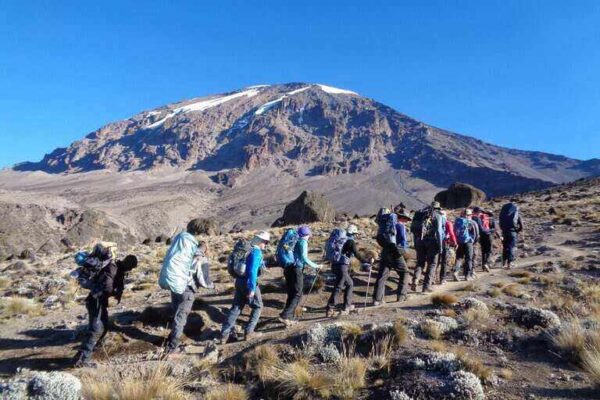
Kilimanjaro Trekking Resources For Planning
Rift and Ridge Safaris provides trusted Kilimanjaro trekking resources for planning every stage of your adventure, from choosing the best Kilimanjaro trekking route and preparing the right gear to understanding acclimatization, permits, and trekking seasons. Our Kilimanjaro trekking guides help hikers plan confidently with practical tips, route comparisons, and expert support tailored to different fitness levels and travel styles. With detailed Kilimanjaro trekking planning resources, we make it easier to organize a safe, smooth, and unforgettable climb to the Roof of Africa.
Altitude and Acclimatization
Altitude sickness, or acute mountain sickness (AMS), is the most common challenge on Kilimanjaro. It is not a matter of fitness; even highly trained athletes can be affected. Proper acclimatization is essential for a safe and successful climb.
Symptoms of mild AMS can include headache, nausea, fatigue, and disturbed sleep. More serious symptoms, such as confusion, loss of coordination, or breathing difficulties, require immediate descent.
Our guides conduct regular health checks throughout the climb and are trained to monitor every trekker closely. Safety is always the highest priority.
Tips for Acclimatization
- Choose a longer route for better altitude adaptation
- Ascend slowly and take rest days seriously
- Drink 3 to 4 litres of water daily
- Avoid alcohol during the trek
- Consult your doctor before climbing
What to Expect on Summit Night
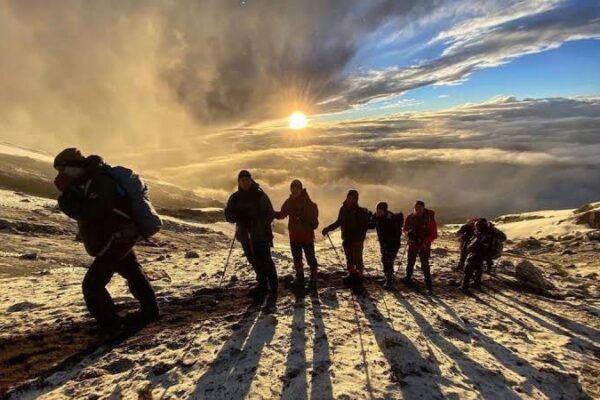
Summit night is the most physically demanding part of the trek. Climbers usually begin the final ascent between midnight and 1am, hiking through cold, dark conditions over steep scree slopes.
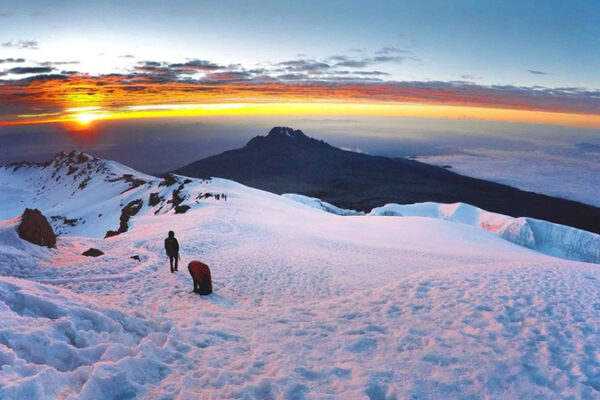
Despite the challenge, reaching Uhuru Peak at sunrise is an unforgettable experience. Watching the first light spread across the African plains while glaciers glow around you is a moment many trekkers describe as life-changing.
Kilimanjaro Trekking Packing Essentials
- Thermal base layers and insulating clothing
- Waterproof outer shell and warm down jacket
- Waterproof hiking boots
- Warm hat, gloves, and neck gaiter
- Trekking poles
- Headlamp with spare batteries
- Sunscreen and UV-protection sunglasses
- Water bottles or hydration system
- High-energy snacks
- Personal first aid kit and blister care supplies
Best Time to Climb Kilimanjaro
Kilimanjaro trekking can be year-round, but the best conditions are typically during the dry seasons:
- January to mid-March
- June to October
These months generally offer clearer skies, drier trails, and more stable weather conditions.
The rainy seasons from March to May and November to early December bring wetter and cloudier conditions, but climbs are still possible and often quieter.
Our Commitment to Ethical Porter Treatment
Kilimanjaro’s porters are the backbone of every successful trek. They carry equipment, prepare meals, and support climbers throughout the journey.
At Rift & Ridge Safaris, we are committed to fair porter treatment. Our crew members are paid fairly, provided with proper equipment and meals, and protected under Kilimanjaro National Park regulations regarding working conditions and load limits.
We believe ethical trekking creates a better experience for both travelers and mountain crews.
Frequently Asked Questions About Kilimanjaro Trekking
How hard is it to climb Kilimanjaro?
Kilimanjaro is a non-technical high-altitude trek that does not require ropes or technical climbing experience. The main challenge is altitude rather than terrain. With proper preparation and a gradual ascent, many trekkers successfully reach the summit.
What is the summit success rate on Kilimanjaro?
Summit success rates vary by route and itinerary length. Longer routes such as Lemosho and the Northern Circuit generally have higher success rates because they allow more time for acclimatization.
Do I need a guide to climb Kilimanjaro?
Yes. All climbers are legally required to climb with a licensed guide registered with Kilimanjaro National Park.
What is the best route for first-time trekkers?
The Lemosho Route is often recommended for first-time trekkers because of its excellent acclimatization profile, high summit success rate, and scenic landscapes.
Can I combine a Kilimanjaro trekking with a Tanzania safari?
Yes. Many travelers combine Kilimanjaro trekking with a Northern Circuit safari, including destinations such as Serengeti, Ngorongoro Crater, and Tarangire National Park.
What does the price include?
Your Kilimanjaro climb includes all essential logistics from arrival at the mountain to your return.
This covers all park entry and conservation fees, hut or camping accommodation, professional licensed mountain guides, cooks, and porters, as well as all meals prepared during the trek.
All group camping equipment is provided, including tents and sleeping mats. Throughout the climb, you are supported with daily health monitoring, safety management, and full operational coordination by the mountain team.
Why Climb Kilimanjaro With Us
We are a Tanzania-based operator, not a booking platform and not a reseller. Our guides live in the communities around Kilimanjaro. Our operations are run from Moshi. When something happens on the mountain, we respond directly, not through a third party.
Our Guides
Every lead guide on our Kilimanjaro climbs holds a Wilderness First Responder certification and has a minimum of five years of guiding experience on the mountain. We do not assign newly qualified guides to lead climbs. Our assistant guide ratio ensures that on summit night, no climber is left without direct support within visible distance.
Safety Standards
We carry supplemental oxygen on every climb and conduct nightly pulse oximeter readings at camp. Our team know the specific signs of AMS, HACE, and HAPE and are trained to act decisively. We make descent recommendations based on clinical observation, not on client pressure to continue.
Transparent Pricing
All park fees, rescue fees, and camping fees are included in our quoted price. Kilimanjaro park fees run to several hundred dollars per person, and some operators quote artificially low prices by omitting them. Our quotes are complete, with no hidden additions.
Porter Welfare
We are KPAP-affiliated. Porter wages, load limits, equipment standards, and food allocation are tracked and audited. This is documented practice that clients can verify on the mountain.
Small Group Sizes
Private climbs are run entirely at the pace and preference of the client. Group departures are kept small, a maximum of eight climbers per group, so that guiding attention is genuine rather than crowd management.
Choosing Your Kilimanjaro Route
The best route is the one that matches your fitness level, your available time, your budget, and the kind of experience you want on the mountain.
- First-time climbers wanting the best chance of reaching the summit: Lemosho, 8 days.
- Climbers wanting the quietest experience and a full mountain traverse: Northern Circuit, 9 days.
- Those on a tighter schedule or who prefer hut accommodation: Marangu, 6 days.
- Climbers during the rainy season, or those wanting fewer people on the trail: Rongai, 7 days.
- Active hikers wanting a popular, well-established challenge with excellent scenery: Machame, 7 days.
Whatever route you choose, the quality of your guide team and the length of your itinerary will have more impact on your experience and your summit success than any other factor.
Fitness and Preparation for Kilimanjaro
Kilimanjaro is not a technical climb. No mountaineering experience, rope skills, or specialist training is required. What you do need is a genuine base of cardiovascular fitness and the mental resolve to keep moving through discomfort.
Physical Fitness
If you can comfortably hike for 6 to 8 hours consecutively on back-to-back days, you are in the right range. Build your fitness over three to four months before your climb with activities that include sustained uphill effort: hiking, stair climbing, cycling, and running all contribute.
Altitude is the great equalizer. Extremely fit athletes sometimes struggle more than moderately fit people who acclimatize well and pace themselves correctly. Fitness helps, but patience and pacing matter most on summit night.
Training Recommendations
- Hike on consecutive days with a weighted pack (10 to 12kg) if possible this simulates the cumulative physical fatigue of the trek.
- Include real elevation gain in training hikes. Flat trails do not prepare you for sustained uphill effort.
- Build cardiovascular fitness with 3 to 4 sessions per week, each at least 45 to 60 minutes.
- Practice walking slowly. Kilimanjaro pace (pole pole in Swahili) is deliberately very slow, and many fit climbers find this uncomfortable at first.
Altitude Preparation
There is no way to fully replicate altitude at sea level. The best preparation is a long itinerary, proper hydration throughout the climb, consistent pacing, and trusting your guide’s judgment.
Diamox (acetazolamide) is a prescription medication that can reduce altitude sickness symptoms. If you are considering it, discuss it with your doctor well before travel. It is not suitable for everyone and carries side effects.
Mental Preparation
Summit night tests mental endurance as much as physical capacity. It is cold, dark, slow, and long. Knowing this in advance helps. Talk to people who have done it. Have a clear personal reason for being on that mountain. Trust your guide; they have made this ascent many more times than you have.