Amazing 8-Day Lemosho Route: Guaranteed Summit Success.
All-Inclusive 8-Day Lemosho Route Package
The Lemosho Route is widely considered the most well-rounded way to climb Kilimanjaro. Approaching from the west, it gives climbers eight full days on the mountain, a thorough acclimatization arc, and some of the most varied terrain on any route. If you want to maximize your chances of reaching Uhuru Peak while experiencing the full character of the mountain, Lemosho covers all of it.
The extra days are not padding. They are the primary reason this route consistently delivers higher summit success rates than shorter alternatives, typically above 85 percent for well-prepared climbers.
Amazing 8-Day Lemosho Route adventure with high summit success rates. Trek Kilimanjaro through stunning landscapes with expert guides and support in Tanzania.
| Feature | Details |
|---|---|
| Starting Point | Londorossi Gate (2,100m / 6,890ft) |
| Summit | Uhuru Peak, 5,895m / 19,341ft |
| Duration | 8 Days |
| Difficulty | Moderate to Challenging |
| Best For | First-time Climbers, Those Prioritizing Acclimatization |
| Summit Approach | Via Barafu Camp, Southern Circuit |
| Best Months | January to March and June to October |
Why Choose the Lemosho Route
- Eight days of the Lemosho Route trek give your body genuine time to adjust to altitude, the single most important factor in summit success.
- The western approach via the Shira Plateau is quieter in the early days, then merges with the Southern Circuit for spectacular 360-degree summit views.
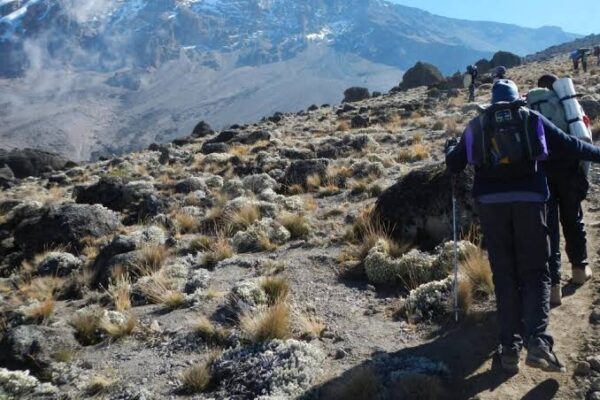
- The Lemosho route passes through all five of Kilimanjaro’s ecological zones: montane forest, heath, moorland, alpine desert, and the arctic summit.
- A southern and eastern traverse before the summit push means climbers see parts of the mountain most routes miss entirely.
- Summit success rates are among the highest on the mountain, typically above 85 percent on the 8-day Lemosho route itinerary for well-prepared climbers.

Detailed Trek Itinerary: 8-Day Lemosho Route Package
Day 1: Londorossi Gate to Mti Mkubwa Camp
Distance: 5km | Elevation: 2,100m to 2,750m | Hiking Time: 3-4 hours | Terrain: Dense montane rainforest
After completing park registration at Londorossi Gate, you enter the forest on a clear trail winding uphill through ancient moss-draped trees. Colobus monkeys are commonly spotted in the canopy. A short, gentle first day ideal for settling into your pack and finding your rhythm on the mountain. Overnight: Mti Mkubwa (Big Tree) Camp, 2,750m
Day 2: Mti Mkubwa to Shira 1 Camp
Distance: 8km | Elevation: 2,750m to 3,500m | Hiking Time: 5-6 hours | Terrain: Forest giving way to open moorland
The forest thins as you gain altitude, opening onto the vast Shira Plateau, a former volcanic crater and one of the most distinctive landscapes on the mountain. You will begin to feel the thinning air today. Keep your pace steady and drink water consistently. Overnight: Shira 1 Camp, 3,500m
Day 3: Shira 1 to Shira 2 Camp
Distance: 9km | Elevation: 3,500m to 3,840m | Hiking Time: 4-5 hours | Terrain: Open plateau, rocky outcrops
A gentler acclimatization day crossing the remainder of the Shira Plateau. The elevation gain is modest, and the long walk at altitude helps your body adapt without overexerting. On a clear morning, Kibo’s summit cone appears in full across the plateau. Overnight: Shira 2 Camp, 3,840m
Day 4: Shira 2 to Barranco Camp via Lava Tower
Distance: 10km | Elevation: 3,840m to 4,630m (Lava Tower), descend to 3,976m | Hiking Time: 6-7 hours | Terrain: Rocky trail, alpine desert, lava formations
One of the most important acclimatization days on the entire climb. You ascend to Lava Tower at 4,630m, spending time at high altitude to stimulate red blood cell production, then descend to Barranco at 3,976m for the night. Climb high, sleep low. Many climbers feel the altitude around Lava Tower, this is normal. Eat lunch there, rest, then continue down. Overnight: Barranco Camp, 3,976m
Day 5: Barranco Camp to Karanga Camp
Distance: 5km | Elevation: 3,976m to 4,035m | Hiking Time: 4-5 hours | Terrain: Barranco Wall scramble, then traverse
The morning opens with the Barranco Wall, a steep rocky scramble that looks daunting from below but requires no technical equipment. Your guides know every step. Once at the top, the trail traverses several valleys toward Karanga, with clear views of the southern ice fields. Overnight: Karanga Camp, 4,035m
Day 6: Karanga Camp to Barafu Camp
Distance: 4km | Elevation: 4,035m to 4,673m | Hiking Time: 3-4 hours | Terrain: Rocky, exposed trail above the vegetation line
A short but significant day. Arriving at Barafu early gives you time to rest, eat well, and sleep before the midnight start. Your guide will brief you on the summit night plan and check your gear. Try to sleep even if you do not feel tired. Overnight: Barafu Camp, 4,673m
Day 7: Barafu to Uhuru Peak, then Descent to Mweka Camp
Distance: 5km ascent / 12km descent | Elevation: 4,673m to 5,895m, descend to 3,100m | Hiking Time: 7-8 hours up, 4-5 hours down | Terrain: Loose scree, possible snow, forest descent
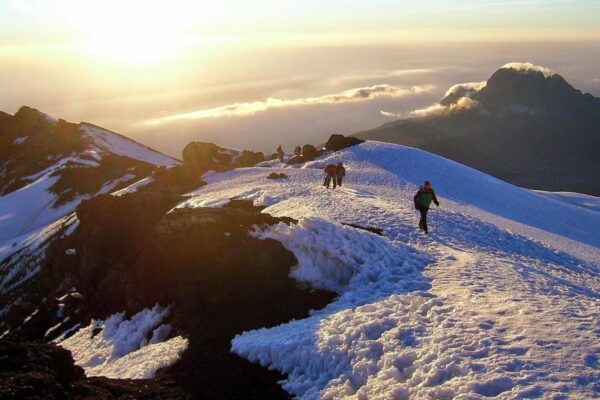
You leave Barafu around midnight, moving slowly and steadily through the dark. Temperatures can drop below minus 15 degrees Celsius. Stella Point at 5,756m marks the crater rim and a major milestone. From there, another 45 to 60 minutes brings you to Uhuru Peak at 5,895m. Sign the register, take in the view, then begin the long descent to Mweka Camp. Overnight: Mweka Camp, 3,100m
Day 8: Mweka Camp to Mweka Gate
Distance: 10km | Elevation: 3,100m to 1,640m | Hiking Time: 3-4 hours | Terrain: Forest trail
A final walk through the forest to Mweka Gate, where summit certificates are issued. Tips for porters and guides are typically given here. Transfer to Moshi or Arusha to shower, rest, and celebrate. End of trek.
| Lemosho Route Inclusions | Lemosho Route Exclusions |
|---|---|
| All KINAPA park, camping, and rescue fees | International flights and travel insurance (mandatory – must include emergency evacuation cover) |
| Experienced, licensed, and certified lead guide | Personal sleeping bag rated to at least -10°C |
| Assistant guides (1:2 ratio on summit night) | Personal trekking gear, clothing, and footwear |
| Porters for camp and communal equipment (15kg personal bag limit) | Tips and gratuities for guides and porters (strongly encouraged) |
| Cook and all meals: breakfast, lunch, dinner, and snacks | Alcoholic beverages |
| Drinking water throughout your Lemosho route trek | Personal medical expenses or altitude sickness medication (Diamox on request; discuss with your doctor first) |
| All camping equipment: tents, sleeping mats, dining and toilet tents | Costs from early descent or evacuation (covered by your travel insurance) |
| Emergency supplemental oxygen carried by lead guide | |
| Nightly pulse oximeter monitoring at camp | |
| KINAPA summit certificates | |
| Private transfers to/from Moshi or Arusha | |
| Hotel accommodation in Moshi or Arusha (where the package includes) |