
Big Five Safaris In Tanzania and Epic Wildlife Tour Packages
All You Need To Know About Big Five Safaris in Tanzania
Tanzania is one of the best countries in Africa to see all the Big Five animals: lions, leopards, elephants, buffalo, and rhinos in a single trip. The Serengeti, Ngorongoro Crater, and Tarangire National Park offer some of the highest concentrations of these species on the continent.
There are places in the world where wildlife sightings feel like luck. Tanzania is not one of them. Here, the Big Five are not a checklist; they are a near-certainty, especially when you plan your routes with someone who knows the terrain.
Most visitors encounter lion prides within the first day in the Serengeti. Elephant herds numbering in the hundreds move through Tarangire’s dry riverbeds between July and October. Leopards are more elusive, but the fever tree woodlands around Seronera are among the most reliable leopard habitats in East Africa.
WHERE TO FIND EACH OF THE BIG FIVE
- Lion: Serengeti plains (year-round), Ngorongoro Crater floor
- Leopard: Seronera Valley, Lake Manyara tree-climbing leopards
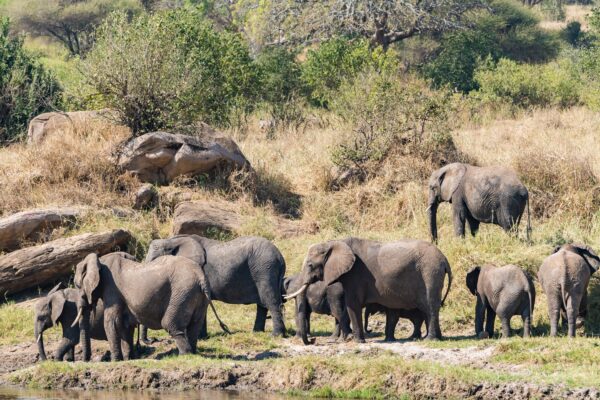
- Elephant: Tarangire National Park, Ruaha National Park
- Buffalo: Ngorongoro Crater, Katavi, Southern Serengeti
- Black Rhino: Ngorongoro Crater (roughly 20–30 individuals), Mkomazi National Park
HOW LONG DO YOU NEED?
A focused Big Five safari across the Northern Circuit, from Arusha to Tarangire, Serengeti, and Ngorongoro, works well over 7 to 10 days. Rushing it into five days means compromising game drive time. The animals don’t follow a schedule, and neither should you.
THE RHINO REALITY
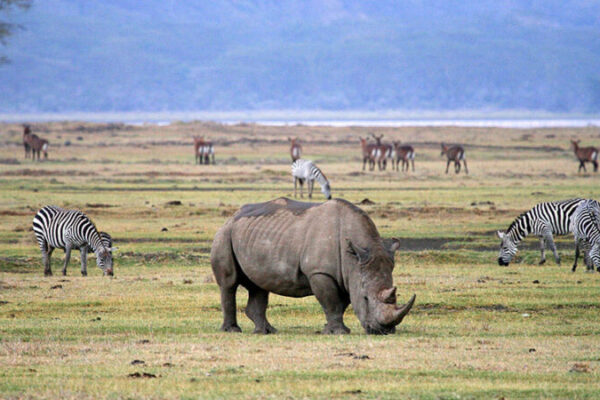
Black rhino sightings in Tanzania are rare and genuinely thrilling precisely because of that rarity. Ngorongoro Crater holds one of East Africa’s last protected black rhino populations. Spotting one on the crater floor, usually in the late morning near Lerai Forest, is a moment that stays with you for life.
Tanzania’s black rhino population is critically endangered, with fewer than 150 individuals remaining across the country. That number has grown steadily from a low of around 10 in the 1990s, largely due to intensive anti-poaching efforts inside the Ngorongoro Conservation Area and Mkomazi National Park. Seeing one is not just a wildlife moment; it is evidence that conservation, done properly, works.
THE STATUS OF EACH ANIMAL
Understanding where each species stands gives the sightings a different kind of weight.
- Lion: Vulnerable. Tanzania holds roughly 40% of Africa’s remaining lion population, an estimated 15,000 to 20,000 individuals. The Serengeti-Mara ecosystem is one of the last places on earth where lions exist in genuinely large, stable prides.
- Leopard: Vulnerable. More adaptable than lions and therefore more widespread, but heavily pressured by habitat loss and human-wildlife conflict outside protected areas. Tanzania’s national parks remain strongholds.
- Elephant: Endangered (African forest elephant) / Vulnerable (African savanna elephant). Tanzania’s elephant population was devastated by poaching between 2009 and 2014, dropping from roughly 109,000 to under 43,000. Numbers have since recovered significantly, and Tarangire and Ruaha are now home to some of the largest herds on the continent.
- Buffalo: Least Concern. Cape buffalo are the most numerous of the Big Five in Tanzania and arguably the most underappreciated. Old bulls known as “dagga boys” that have left the herd are responsible for more human fatalities in Africa than lion or leopards. They are not an animal to take lightly.
- Black Rhino: Critically Endangered. Fewer than 6,000 remain globally. Tanzania’s population is small but growing, and the Ngorongoro Crater represents one of the most accessible and best-protected rhino sanctuaries in East Africa.
Discover Big Five Safaris in Tanzania with Rift and Ridge Safaris, expert-guided wildlife tours in Tanzania, luxury lodges, and encounters in top national parks.
HOW BIG FIVE SAFARI GAME DRIVES WORK
Most camps structure the day around two drives. The morning drive departs at or just after first light typically 6:00 to 6:30 AM and returns to camp for a late breakfast around 10:30 or 11:00. This is prime time: predators are active, the light is low and warm, and the bush has not yet heated up enough to push animals into shade.
The afternoon drive departs around 3:30 to 4:00 PM and runs until dusk, returning after the last light fades. Evening drives catch the second peak of predator activity and often produce some of the most dramatic sightings a leopard dragging a kill into a tree, lion cubs roughhousing in the fading light, buffalo herds moving silently across the floodplain.
Full-day game drives are worth doing at least once, particularly in Tarangire during peak season or in the northern Serengeti during the crossing period. Bring a packed lunch from camp and stay out through the midday heat when most vehicles return to camp, and you will have the roads largely to yourself. Animals do not disappear at noon they just relocate to shade, which takes patience rather than luck to find.
Night drives are available at camps on private concessions bordering the major parks, and they reveal a completely different set of species: civets, genets, porcupines, bushbabies, and if you are fortunate, a leopard or caracal moving through the darkness. Not all parks permit night drives within their boundaries, but they can be arranged through neighboring conservancies.
BEST TIME FOR BIG FIVE SIGHTINGS
There is no bad month in Tanzania, but there are better ones depending on what you are prioritizing.
The dry season (June to October) concentrates animals around water sources, making sightings more predictable and photography cleaner. Grass is shorter, sight lines are longer, and predators are hunting in the open rather than from cover.
The Ngorongoro Crater delivers year-round, regardless of season, because the crater walls act as a natural enclosure. Animals do not leave the same way they do in open parks.
For leopard specifically, the Seronera Valley is most productive when the grass is short January to February and June to September are the peak windows. Leopards are always there; the question is whether the vegetation lets you see them.
If rhino is the priority, plan around the crater and go early. Morning descents before 8:00 AM give the best odds of finding rhino grazing in the open before the heat moves them into the Lerai Forest.
All-Inclusive Big Five Safaris in Tanzania and Wildlife Tour Packages
Explore the adventure of a lifetime with our all-inclusive Big Five Safaris in Tanzania, designed to bring you closer to Africa’s most iconic wildlife in comfort and style. From the endless plains of the world-famous Serengeti National Park to the wildlife-rich Ngorongoro Conservation Area, our expertly tailored Tanzania tour packages include luxury accommodations, professional guides, park fees, game drives, and seamless transfers. Whether you are seeking a family adventure, romantic getaway, or photographic expedition, our Big Five Safaris in Tanzania offer unforgettable encounters with lions, leopards, elephants, buffaloes, and rhinos while showcasing the breathtaking landscapes and rich cultural heritage that make Tanzania one of Africa’s premier safari destinations.
7-Day Tanzania Big 5 Focused Northern Circuit
This is the minimum for a proper Big Five safari. It works well for travelers with limited time who want coverage rather than depth.
- Day 1: Arrive at Kilimanjaro International Airport. Transfer to Arusha. Briefing with your guide and overnight at an Arusha lodge.
- Day 2–3: Tarangire National Park (2 nights). Elephant herds, baobab landscape, arrival game drive on the afternoon of day 2.
- Day 4: Drive to Ngorongoro. Afternoon at leisure on the crater rim. Overnight rim lodge.
- Day 5: Full day on the Ngorongoro Crater floor. Packed lunch. Lion, rhino, hippo, flamingo.
- Day 6–7: Fly to the Serengeti (central or northern, depending on the season). Two full days of game drives. Return to Arusha by charter flight on day 7, afternoon or evening departure.
Notes: This itinerary covers all Big Five across three parks. Rhino is not guaranteed; Ngorongoro gives the best odds, but everything else is a near-certainty with a good guide.
10-Day Comprehensive Northern Circuit Experience
Ten days is the sweet spot. Enough time to settle into the rhythm of the bush, stay longer at sightings, and not feel like you are being moved before you are ready.
- Day 1: Arrive in Kilimanjaro. Transfer and overnight in Arusha.
- Day 2–4: Tarangire National Park (3 nights). Morning and afternoon drives. Optional full-day drive on day 3.
- Day 5: Drive to Lake Manyara. Half-day game drive. Overnight at Manyara Lodge or camp.
- Day 6–7: Ngorongoro Conservation Area (2 nights on the rim). Full crater descent on day 6. Optional Olduvai Gorge visit or Empakaai Crater walk on day 7.
- Day 8–10: Fly to Serengeti, positioned by season—central for year-round wildlife, northern for crossings (Jul–Oct), and southern (Ndutu) for calving (Jan–Mar). Three full days of game drives. Fly back to Arusha on the morning of day 10 for afternoon or evening departure.
Notes: The addition of Lake Manyara adds tree-climbing lions and exceptional birdlife. Three nights in the Serengeti gives enough time to cover multiple zones and genuinely absorb the scale of the ecosystem.

14-Day Classic Big 5 Safari with Southern Extension
For travelers who want both the iconic north and the raw wilderness of the south.
- Days 1–7: Northern Circuit as above (Tarangire, Manyara, Ngorongoro, Serengeti).
- Day 8: Fly from Serengeti to Ruaha (via Dar es Salaam or direct charter depending on availability). Afternoon arrival game drive.
- Days 9–11: Ruaha National Park (3 nights). Walking safaris, full-day drives, night drives on concession. Lion, elephant, wild dog, kudu.
- Day 12–13: Fly to Zanzibar for two nights of coast time before departure. Optional.
- Day 14: Return flight home from Zanzibar or Dar es Salaam.
Notes: Ruaha does not add much to the Big Five checklist; rhinos are not present, and the others are covered in the north. What it adds is an entirely different experience of Africa: remote, uncrowded, and genuinely wild. It is the upgrade for travelers who already know what a lion looks like and want to understand the ecosystem those lions live in.


WHERE TO STAY
Tanzania’s camps and lodges range from comfortable budget options to some of the most exclusive properties in Africa. The right choice depends on your budget, your tolerance for roughing it, and how much exclusivity matters to you.
A note on booking: the best camps in the right locations during peak season sell out months in advance. If you are planning a July to October safari, particularly in the northern Serengeti, start the conversation at least six months ahead.
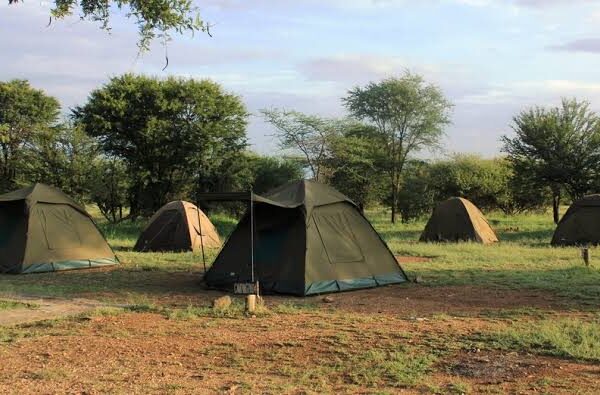
Budget (USD 150–300 per person per night): Public campsites and basic tented camps inside the national parks. Shared bathroom facilities in some cases and self-catering in others. The wildlife access is identical to more expensive options; you are in the same parks, on the same roads.
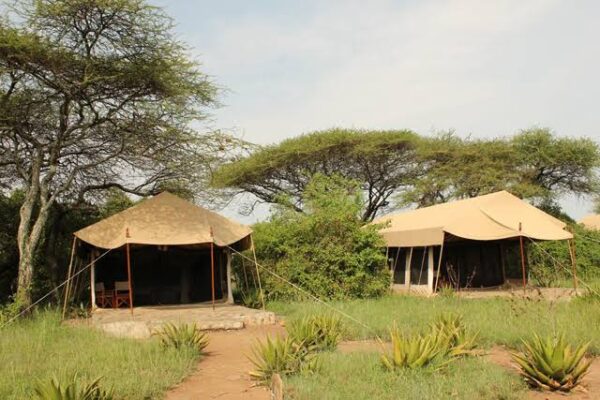
Mid-range (USD 300–600 per person per night): permanent tented camps and lodges with en-suite facilities, included meals, and resident guides. This tier represents excellent value in Tanzania. Camps at this level are typically small (12 to 20 guests), and the guiding quality is generally high.
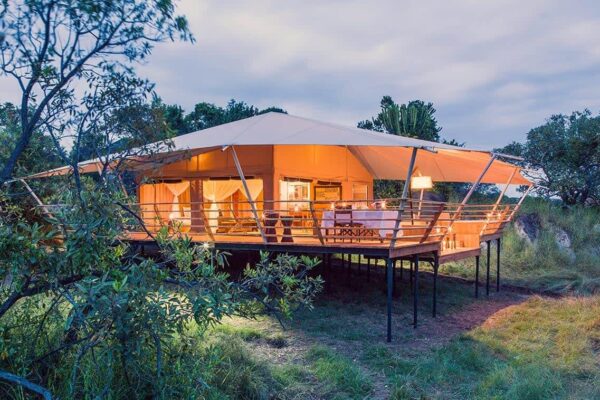
Luxury (USD 700–1,500+ per person per night): Private tented camps with dedicated staff, private game drives, bespoke itineraries, and the kind of attention to detail that removes every logistical friction from the trip. Properties at this level sit on private conservancies adjacent to the national parks, allowing night drives and walking safaris.
BIG FIVE SAFARI PHOTOGRAPHY
Tanzania’s light is extraordinary, particularly in the golden hours immediately after sunrise and before sunset. Most camps run morning drives that depart at first light and afternoon drives that return at dusk. Those two windows are when predators are active and the light is at its best.
A good guide will also position the vehicle to keep the sun behind you. It sounds basic, but it is the detail that separates an experienced guide from one who is simply following coordinates to a sighting and parking wherever space is available.
For focal length: a 300–400mm lens is useful but not essential. Many of the most powerful images come from animals that are simply not afraid of vehicles which is the norm in Tanzania’s parks after generations of habituation. A lion pride resting 15 meters from the Land Cruiser does not require a long lens. It requires patience and a guide who knows when to cut the engine and wait.
A few practical notes for photographers specifically:
- Bean bags or window mounts work better than tripods in a moving vehicle
- A second body or a wide-angle lens is worth packing some of the best moments happen close
- Dust is constant in the dry season; keep camera bags sealed when not shooting
- The green season (January to April) produces dramatically different light overcast, soft, and ideal for portraits of animals against lush backgrounds
INSIDER NOTE
The best Big Five sightings happen with a knowledgeable guide who reads animal behavior, not just tracks GPS coordinates to crowded spots. Ask your operator how their guides are trained and how long they have been working in each park. That question alone separates good operators from great ones.
Start planning your Big Five safari today. Reach out and we’ll match you with the right parks, the right timing, and a guide who genuinely knows the bush.